How Much Does Alloy Wheel Refurbishment Cost in the UK?
Alloy wheels occupy a unique position in the overall presentation of a vehicle. They are both functional and highly visible, which means they influence not only how a car drives, but how it is perceived. Even on a well-maintained vehicle, damaged or deteriorating wheels can quickly detract from its appearance, giving the impression of neglect regardless of the condition of the rest of the car.
For that reason, alloy wheel refurbishment has become an increasingly common service across the UK. As more vehicles are fitted with larger and more complex wheel designs, drivers are more aware of the impact that wheel condition has on both aesthetics and value. Inevitably, this leads to one of the most frequently asked questions: how much does alloy wheel refurbishment actually cost?
Typical Alloy Wheel Refurbishment Costs
For most customers, the cost of alloy wheel refurbishment sits within a relatively consistent range, particularly for the most common wheel sizes used across the UK.
For standard 17 to 19-inch alloy wheels, a full refurbishment with a painted or powder-coated finish will typically cost between £80 and £110 per wheel. Diamond cut wheels are more expensive due to the additional machining involved, with prices more commonly falling between £120 and £150 per wheel.
These prices usually include the full refurbishment process, including tyre removal, preparation, refinishing and refitting. Pricing can vary slightly between locations, as well as depending on factors such as wheel size, condition and finish complexity.
Heavily damaged wheels or more intricate finishes may require additional work, which can increase the overall cost.
The answer is rarely straightforward. Unlike fixed automotive services such as tyre replacement or routine servicing, alloy wheel refurbishment is highly dependent on the specific characteristics of each wheel. Pricing reflects the level of work required to restore the wheel properly, rather than a single standardised process.
Understanding what drives these costs is essential, particularly for drivers comparing different providers. A lower price does not always represent better value, and in some cases may indicate a more limited or cosmetic approach to repair.
Why Alloy Wheel Refurbishment Costs Vary
At a surface level, many wheels may appear to have similar damage. Light kerb scuffs, minor scratches or dull finishes can look relatively uniform from one vehicle to another. However, beneath that surface, the level of work required to restore each wheel can differ significantly.
One of the most immediate factors is wheel size. Over the past decade, there has been a clear trend towards larger alloy wheels, with 18-inch, 19-inch and even 22-inch wheels becoming increasingly common. Larger wheels require more preparation, more coating material and more handling throughout the refurbishment process. This alone can increase both labour time and material costs.
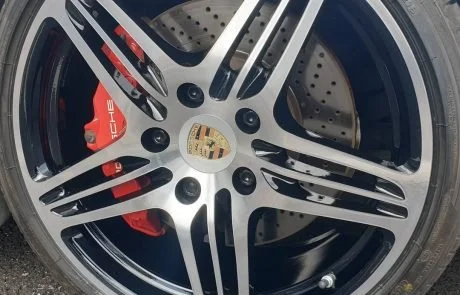
The type of finish is another major consideration. Not all alloy wheels are constructed or finished in the same way. Standard painted wheels and powder-coated wheels follow a relatively consistent refurbishment process, but diamond cut wheels introduce a completely different level of complexity. These wheels require precision machining to restore their appearance, which involves specialist equipment and additional stages.
The Difference Between Cosmetic Repairs and Full Refurbishment
One of the most important, and often misunderstood, aspects of alloy wheel pricing is the distinction between cosmetic repairs and full refurbishment.
SMART repair techniques are widely available and are often marketed as a quick and cost-effective solution. These repairs focus on the damaged area only, blending the repair into the surrounding surface. For minor scuffs, this can provide an immediate visual improvement.
However, SMART repairs do not involve refinishing the entire wheel. This means that any existing wear, corrosion or deterioration outside the repaired area remains untreated. While the wheel may look improved initially, inconsistencies in the finish and underlying issues can become more noticeable over time.
Full alloy wheel refurbishment takes a more comprehensive approach. The wheel is stripped back to its base material, allowing all damage to be assessed and repaired. The entire surface is then refinished, creating a consistent appearance and a more durable result.
From a pricing perspective, this explains why some services appear significantly cheaper than others. The difference often lies not in efficiency, but in the scope of work being carried out.
Diamond Cut Wheel Refurbishment and Its Impact on Cost
Diamond cut alloy wheels have become increasingly popular due to their distinctive, high-contrast finish. However, their construction makes refurbishment more complex and, as a result, typically more expensive.
Unlike painted wheels, diamond cut wheels are finished using a lathe to machine the face of the wheel. This process removes a fine layer of metal, creating the reflective surface that defines the style. Once machined, the wheel must be lacquered to protect the exposed aluminium.
Restoring this finish requires precision equipment and careful calibration. The machining process must be accurate to maintain both the appearance and the structural integrity of the wheel. This additional complexity increases both the time required and the cost of refurbishment.
It is also important to note that diamond cut wheels have a limited number of refurbishment cycles. Each time the wheel is machined, a small amount of material is removed. Over time, this limits how often the process can be repeated safely.
Refurbishment vs Replacement: A Cost Perspective
When faced with damaged alloy wheels, some drivers consider replacement as the default option. While this may be necessary in cases of severe structural damage, it is often not the most economical solution.
Original equipment alloy wheels, particularly those fitted to premium vehicles, can be expensive to replace. In many cases, refurbishment offers a way to restore the wheel to a high standard at a fraction of the cost.
Refurbishment also allows drivers to retain the original design of their wheels, which is often an important consideration for both aesthetics and resale value.
Why Price Alone Should Not Guide the Decision
While cost is naturally an important factor, it should not be the only consideration when choosing a refurbishment service. The processes used, the level of preparation and the expertise of the technicians all play a critical role in determining how long the finish will last.
A lower price may reflect a reduced level of work, such as a cosmetic repair rather than a full refurbishment. While this may offer short-term savings, it can lead to additional costs if the finish deteriorates more quickly.
At The Wheel Specialist, each wheel is assessed individually to determine the most appropriate refurbishment method. The focus is on achieving a consistent, high-quality finish that is designed to withstand everyday driving conditions, rather than simply delivering a quick visual improvement.