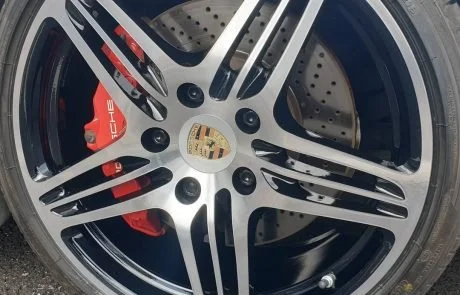
Modern alloy wheels are no longer just functional components. They are a central part of vehicle design, often used by manufacturers to enhance both visual appeal and perceived value. Among the most common finishes seen on UK roads today are standard painted alloy wheels and diamond cut alloy wheels.
At first glance, the difference between these two finishes may appear purely aesthetic. However, when it comes to alloy wheel refurbishment, the distinction becomes far more significant. The way each type of wheel is constructed directly affects how it can be repaired, how many times it can be refurbished, and what results can realistically be achieved.
Understanding these differences is essential for any driver considering refurbishment, particularly when comparing services or evaluating long-term value.
What Are Standard Painted Alloy Wheels?
Standard alloy wheels are typically finished using either wet paint or powder coating applied across the entire surface of the wheel. This creates a uniform appearance and allows for a wide range of colour options, from traditional silvers and greys to more contemporary blacks and custom finishes.
From a refurbishment perspective, painted wheels are relatively straightforward. Because the finish covers the entire wheel, the refurbishment process involves stripping back the existing coating, repairing any damage and applying a new finish across the full surface.
This uniform approach offers a key advantage: consistency. When the wheel is refinished, the entire surface is treated at the same time, resulting in an even appearance and a cohesive finish.
It also allows for greater flexibility over time. Painted alloy wheels can typically be refurbished multiple times without affecting their structural integrity, provided the process is carried out correctly.
What Are Diamond Cut Alloy Wheels?
Diamond cut alloy wheels are designed to create a more distinctive and visually striking finish. Rather than relying solely on paint, these wheels combine painted areas with a machined metal face.
After the wheel is initially painted, the front surface is cut using a precision lathe. This process removes a very thin layer of metal, exposing a bright, reflective finish that contrasts with the painted sections of the wheel. The result is a high-definition, two-tone appearance that has become increasingly popular on modern vehicles.
Once the machining process is complete, the wheel is coated with a clear lacquer to protect the exposed aluminium from corrosion and environmental damage.
While visually appealing, this construction introduces additional complexity when refurbishment is required.
Why Diamond Cut Refurbishment Is More Complex
The key difference between painted and diamond cut wheels lies in how the finish is achieved. For painted wheels, the finish is applied. For diamond cut wheels, part of the finish is created by physically removing material from the wheel.
This has two important implications.
First, diamond cut refurbishment requires specialist equipment. The wheel must be mounted onto a precision lathe capable of machining the surface accurately. Even minor deviations in alignment or calibration can affect the final appearance, resulting in an uneven or inconsistent finish.
Second, each refurbishment removes a small amount of material from the wheel. While this is necessary to restore the finish, it means that diamond cut wheels have a limited number of refurbishment cycles. Over time, repeated machining reduces the amount of material available, and beyond a certain point, further refurbishment may no longer be advisable.
This limitation does not apply in the same way to painted wheels, which do not rely on removing material to achieve their finish.
Durability and Long-Term Considerations
Another important distinction between the two finishes lies in durability.
Painted and powder-coated wheels tend to offer strong resistance to everyday wear, particularly when properly refurbished. Because the entire surface is coated, there are fewer exposed areas where corrosion can begin.
Diamond cut wheels, by contrast, rely on a lacquer layer to protect the machined surface. If this lacquer becomes compromised, moisture can reach the exposed aluminium, leading to corrosion beneath the surface. This is often seen as a cloudy or milky appearance developing over time.
For this reason, the quality of the refurbishment process is particularly important for diamond cut wheels. Proper preparation, precise machining and effective lacquering are all essential to achieving a durable result.
Choosing the Right Refurbishment Method
One of the most common issues in alloy wheel refurbishment is the misidentification of wheel type. Applying the wrong refurbishment method can lead to unsatisfactory results or, in some cases, irreversible damage.
For example, attempting to treat a diamond cut wheel as a standard painted wheel may remove its defining characteristics. Conversely, unnecessary machining of a painted wheel would be inappropriate and potentially harmful.
Correct identification ensures that the refurbishment process matches the construction of the wheel. This is not simply a technical detail; it is fundamental to achieving a result that is both visually accurate and structurally sound.
Balancing Appearance, Cost and Longevity
When deciding between refurbishment options, drivers often weigh appearance against cost and long-term durability. Diamond cut wheels offer a distinctive aesthetic, but they require a more specialised refurbishment process and have inherent limitations in terms of how often they can be restored.
Painted wheels, while less complex in appearance, provide greater flexibility over time and can be refinished multiple times with consistent results.
Neither option is inherently better. The choice depends on the design of the wheel and the priorities of the driver. What matters is that the refurbishment process is appropriate for the type of wheel being treated.
The Importance of Specialist Assessment
Because of the differences between these finishes, professional assessment is essential before any refurbishment work begins. Identifying the wheel type, evaluating its condition and determining the most suitable process requires both experience and the right equipment.
At The Wheel Specialist, each wheel is assessed individually to determine whether it is painted, powder coated or diamond cut. This ensures that the correct refurbishment method is applied, preserving both the appearance and the structural integrity of the wheel.
The objective is not simply to improve how the wheel looks in the short term, but to restore it in a way that remains consistent and durable over time.