How Long Does Alloy Wheel Refurbishment Take?
For many drivers considering alloy wheel refurbishment, the question of timing is just as important as cost. Unlike cosmetic upgrades that can be delayed or scheduled at convenience, wheels are a critical part of a vehicle’s daily use. Taking a car off the road, even temporarily, requires planning.
In most cases, alloy wheel refurbishment takes between 24 hours and 3 working days.
Powder coated wheels are typically completed in around 24 hours
Diamond cut wheels usually take up to 3 working days due to the additional machining process
Exact turnaround times can vary depending on factors such as wheel condition, finish type and workshop workload, but these timeframes reflect what is required for a proper, durable refurbishment.
It is therefore understandable that many people ask whether alloy wheel refurbishment can be completed in a single day, or even within a few hours. The honest answer is that while some services offer rapid turnaround, the time required for a proper, durable refurbishment depends on a number of important factors.
To understand why, it is necessary to look beyond the idea of refurbishment as a single task and instead view it as a structured, multi-stage process.
What Actually Happens During Alloy Wheel Refurbishment?
A professional alloy wheel refurbishment is not simply a matter of repainting the surface. It is a controlled process designed to restore both the appearance and the durability of the wheel.
The process begins with inspection. Each wheel must be carefully assessed to determine the extent of damage, the type of finish and the most appropriate refurbishment method. This initial stage is critical, as it dictates everything that follows.
Tyres are removed to allow full access to the wheel. This ensures that the entire surface, including areas that are not immediately visible, can be properly treated. Skipping this step may save time, but it limits the quality of the final result.
Once the wheel is prepared for work, the existing finish must be removed. This is typically done through a stripping process that eliminates old paint, lacquer and any contaminants that may interfere with the new coating. Proper stripping creates a clean, stable base for the refurbishment to build upon.
Only after this stage can damage be addressed. Kerb marks, corrosion and surface imperfections are repaired before any new finish is applied. This is one of the most time-sensitive stages, as the quality of the repair directly affects the final appearance of the wheel.
The refinishing stage then follows. Depending on the type of wheel, this may involve painting, powder coating or machining. Each of these processes has its own requirements, particularly in terms of application and curing.
The final stage, curing, is often overlooked when considering timeframes. Coatings must be allowed to cure fully under controlled conditions to achieve the necessary durability. This is not simply a drying period, it is a chemical process that allows the coating to bond effectively to the surface of the wheel.
Why Turnaround Times Vary
Given the number of stages involved, it becomes clear why refurbishment cannot always be completed quickly. Each step serves a specific purpose, and reducing the time allocated to any stage can affect the overall result.
Standard painted or powder-coated wheels generally follow a more straightforward process, but even here, proper preparation and curing take time. Rushing these stages can lead to issues such as poor adhesion, uneven finishes or reduced resistance to corrosion.
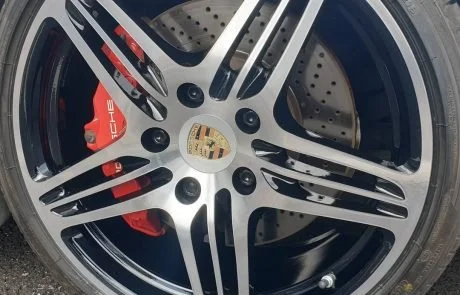
Diamond cut alloy wheels introduce an additional layer of complexity. After preparation, these wheels must be mounted onto a precision lathe and machined to recreate their distinctive finish. This process requires careful calibration and cannot be rushed without compromising accuracy.
Once machining is complete, the wheel must still be lacquered and cured. This means that diamond cut refurbishment typically takes longer than standard wheel refurbishment, even under ideal conditions.
The Trade-Off Between Speed and Durability
One of the key considerations when evaluating refurbishment times is the relationship between speed and quality. Faster services are often available, but they typically involve a more limited scope of work.
Cosmetic or SMART repairs, for example, can be completed relatively quickly because they focus only on the damaged area. While this approach may improve the appearance of the wheel in the short term, it does not address underlying issues such as corrosion or wear across the rest of the surface.
Full refurbishment, by contrast, is designed to provide a consistent and durable finish. This requires time, particularly in the preparation and curing stages. While the process may take longer, the result is more resilient and better suited to everyday driving conditions.
Planning Around Alloy Wheel Refurbishment
For drivers who need their vehicle for daily use, timing becomes a practical consideration. Refurbishment may be required ahead of a lease return, a vehicle sale or simply to restore the appearance of the car.
In these situations, planning ahead is essential. Booking with a specialist allows sufficient time for the refurbishment to be carried out properly, without the need to rush any stage of the process.
It is also worth considering that refurbishment is an investment in the long-term condition of the wheels. Allowing the necessary time for proper preparation and finishing helps ensure that the results last, reducing the likelihood of further work being required in the near future.
Why Proper Process Matters More Than Speed
While it is natural to prioritise convenience, alloy wheel refurbishment is ultimately about achieving a result that is both visually consistent and durable. A faster turnaround may seem appealing, but if it comes at the expense of preparation or curing, the finish may not perform as expected over time.
At The Wheel Specialist, turnaround times are structured around the requirements of the refurbishment process itself. Each stage is given the time it needs to ensure that the final result meets both visual and durability standards.
Rather than focusing on how quickly a wheel can be returned, the emphasis is on how well it performs once it is back on the road.