EV owners and alloy wheels: what is different and why it matters
Electric cars are changing what comes into our branches, and their wheels come with a few differences worth knowing about if you own one. None of it means an EV wheel is a problem, it just pays to understand how they wear, why they pick up damage, and what a proper refurbishment involves.
Heavier cars, harder-working wheels
An EV carries a heavy battery pack, so it tends to weigh more than a comparable petrol or diesel car. That extra weight works the tyres and wheels harder, which is one reason EV tyres can wear faster. Electric motors also deliver their pull instantly, and that instant torque adds to the demands placed on the tyres. For the wheels themselves the upshot is simple: they are carrying more, so it is worth checking your alloys for damage a little more often than you might have with your last car.
Bigger wheels, less room for error
Many EVs run larger wheels with smooth, aero-focused designs that help range. They look sharp, but a big wheel on a low-profile tyre leaves less sidewall to absorb a kerb or a pothole. With less give in the tyre, more of any impact reaches the wheel itself, so scuffs, and occasionally buckles, are easy to pick up on a rim you feel you have barely touched. If your last car ran chunkier tyres, it is an easy difference to underestimate.
Finishes and fitted details
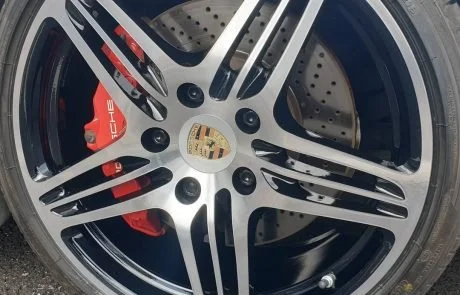
EV wheels often come with intricate finishes, two-tone or diamond-cut looks, or fitted aero inserts designed to smooth the airflow. They are part of what makes the car look modern, and they are also the parts that need care to refurbish properly. A diamond-cut finish, for example, is machined on specialist equipment rather than simply painted, so bringing it back to a factory-standard look takes the right kit and the right hands.
Refurbishing an EV wheel: what to expect
The core job is the same 15-stage strip and refinish we use on any wheel, powder-coat or diamond-cut. The differences are practical rather than dramatic: heavier wheels and specific finishes need the right handling and the right equipment. It is worth asking your local branch about anything particular to your wheels, such as tyre pressure sensors, when you book in. And if a wheel is buckled rather than just scuffed, ask about that too, straightening or repair is often possible and worth checking before you write off an expensive EV wheel.
Cost, and keeping the wheel as designed
Replacing a large EV alloy through the manufacturer is not cheap, and the bigger and more intricate the wheel, the more that stings. A proper refurbishment brings the original wheel back to a factory-standard finish for a fraction of the cost of buying new. It also keeps the wheel as it was designed, which matters more on an EV than on most cars, because the shape of the wheel is there partly to help the car slip through the air and hold onto its range. Our work is backed by our guarantee: 24 months on powder-coat wheels and 12 months on diamond-cut.
A quick word on looking after them
Because EV wheels tend to be larger and lower-profile, a bit of care goes a long way. Take kerbs gently, give potholes room where you safely can, and keep an eye on the rims through winter when grit and salt are about. If you do catch one, sorting it sooner rather than later stops a small scuff turning into corrosion creeping under the lacquer.
Over 1.5 million wheels refurbished and more than 25,000 five-star reviews later, we do nothing but wheels, electric or otherwise. If your EV has picked up some kerb damage, or you just want its alloys looking their best again, find your local branch for a quote.