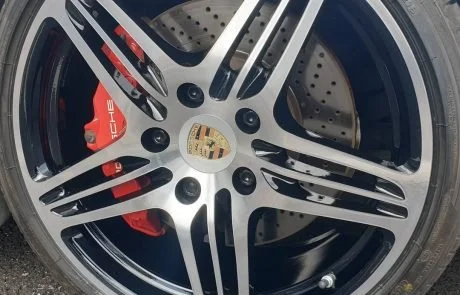
A crack in an alloy wheel is not like a kerb scuff or surface corrosion. It is structural. Depending on where the crack sits and how far it runs, it can become a safety risk.
Not every cracked alloy needs replacing. Many can be repaired by a specialist. It comes down to the type of crack, where it is, and the condition of the rest of the wheel.
What causes alloy wheels to crack
Most cracks come from sudden impact.
Potholes are the most common cause. When a wheel drops into a pothole at speed, the impact force can exceed what the alloy is able to absorb. The crack usually appears at the inner barrel, close to the bead seat, where the wheel is under the most mechanical stress.
Kerbing at speed is another common cause. A direct hit on a kerb or a raised edge, particularly at an angle, can crack the outer flange or the spoke junction. Cracks like this are often visible from the outside of the wheel.
Age and metal fatigue play a part too. Wheels on older vehicles, especially those run at low tyre pressures for long periods, are more likely to crack because they have absorbed more cumulative stress than they were designed for.
Types of crack that can be repaired
Repair options vary depending on where the crack is and how deep it runs.
Hairline cracks on the outer face
Fine surface cracks on the cosmetic face of the wheel, away from structural load areas, are the most straightforward to deal with. A specialist can fill and seal the crack using TIG welding, then re-finish the wheel. Done properly, this restores the structure and the appearance.
Cracks on the outer flange or lip
The outer lip, where the tyre sits, takes a lot of impact damage. Severity varies. Minor cracks in the lip can usually be welded and re-profiled. More extensive damage needs careful assessment before any repair, particularly if it has reached the bead seat area where the tyre seals. A poor seal at the bead seat causes air loss and can lead to tyre failure.
Spoke cracks
Cracks along or through a spoke are more complex, because a spoke is a structural part of the wheel. Whether it can be repaired depends on whether the crack runs through the full thickness of the spoke, how close it is to the hub, and the design of the wheel. An experienced technician can weld many spoke cracks. Those at the spoke-to-hub junction are harder.
Inner barrel cracks
The inner barrel is the part of the wheel that faces the car. Cracks here usually come from pothole impact. This is the most common crack type and many are repairable by welding. Because the inner barrel sits next to the bead seat and the brake components, a full structural assessment is essential before any repair is attempted.
When a cracked wheel cannot be repaired
Sometimes replacement is the only safe option, and a specialist will tell you when you have reached that point.
A crack running through the hub mounting area, where the wheel bolts to the vehicle, cannot be safely repaired. That part of the wheel carries the full weight of the car and is under constant dynamic loading. No weld gives back the original metallurgical strength there.
Multiple cracks, or one that has spread a long way, mean the metal has fatigued beyond recovery. Welding one section of a compromised wheel does not restore the strength of the whole piece.
A wheel that has been repaired before and has cracked again in the same place should be replaced. A re-crack at a previous weld is the end of the repair cycle.
Some wheel designs also make repair structurally inadvisable. Very lightweight forged wheels have tighter engineering tolerances that the heat of welding can affect.
If a specialist says the wheel needs replacing, take the advice seriously. A replacement costs far less than a wheel failure at speed.
The repair process
Where a cracked wheel is assessed as repairable, the tyre comes off first and the wheel is inspected thoroughly, including the inner barrel, which you cannot see with the tyre fitted. The crack is cleaned, prepared and welded using TIG, which allows precise heat control. The welded area is then ground back and shaped, and the wheel is re-balanced. Depending on where the crack was, the cosmetic finish may need restoring as well.
Done well, this returns the wheel to safe structural condition. It takes skill and specialist equipment, which is why a mobile operator cannot do it and a general garage should not attempt it.
What to do if you think your wheel is cracked
Do not wait. A hairline crack that is manageable today can spread under load, particularly if you keep driving on it. The risk goes up in cold weather, when metal contracts, and on roads with a lot of surface variation.
Get the wheel assessed by a specialist before your next long journey. Most TWS centres will assess a wheel at no cost. The technician will confirm whether the wheel is cracked, where the crack is, and whether it can be repaired.
The same advice applies if you are not sure whether you are looking at a crack or a surface scratch. A specialist can tell the difference immediately.
FAQ
Can a cracked alloy wheel be repaired safely?
Many can, using TIG welding by a specialist. Whether repair is safe depends on where the crack is and how severe it is. An assessment is the only way to know for certain.
How much does cracked alloy wheel repair cost?
Crack repair is priced on assessment. It costs more than cosmetic refurbishment because of the welding and structural work involved. Replacement is usually only necessary for severe or hub-area damage.
Is it safe to drive on a cracked alloy wheel?
It depends on the crack. A minor hairline crack in a low-stress area carries less immediate risk than a crack close to the hub or bead seat. If you suspect a crack, have it assessed before driving further. Do not drive at motorway speed on a cracked wheel without professional advice.
Can a pothole crack an alloy wheel?
Yes, and it is the most common cause of alloy wheel cracking, particularly on the inner barrel. If you have hit a significant pothole and noticed a change in handling or a slow puncture that is not down to the tyre itself, get the wheel inspected.
What is the difference between a buckled and a cracked alloy wheel?
A buckled wheel has deformed under impact but is not broken. A cracked wheel has a fracture in the metal. Pothole impact causes both, and both should be inspected by a specialist. Buckled wheels can often be straightened. Cracked wheels need welding or, in severe cases, replacement.
If you think your alloy wheel might be cracked, get it assessed before your next journey. Find your nearest The Wheel Specialist branch. The assessment is free and gives you a clear answer.