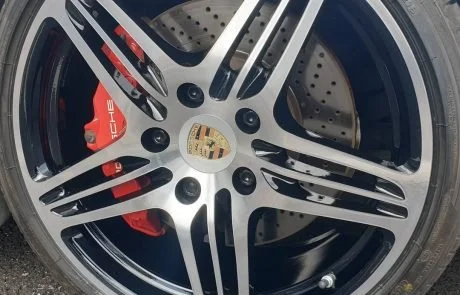
How to repair scuffed and scratched alloy wheels
Scuffed a wheel on a kerb, or picked up a scratch in a car park? It is one of the most common bits of damage we see, and the good news is most scuffed and scratched alloys can be put right. Here is what your options are, what a repair actually involves, and when a light touch-up will do versus when the wheel needs a proper refurbishment.
What causes scuffs and scratches on alloy wheels?
Most of it is kerbing: clip a kerb when parking or turning tight and it scrapes the outer edge of the rim. The rest comes from car park knocks, road debris and stone chips, and general wear. Nearly all of it is cosmetic, damage to the lacquer, paint and the face of the wheel rather than anything structural. If the wheel holds air and the car drives straight, you are usually looking at a cosmetic repair.
Can you repair scuffed or scratched alloy wheels yourself?
For a small, light scuff, a home repair kit can take the worst off, and for a minor mark out of sight that may be enough. Be realistic about what a home repair does and does not do. It sits on the surface, rarely matches the original finish exactly, and tends to show again around the edge of the wheel where the wear is worst. For anything more than a light mark, for a colour or finish that needs to match, or for a diamond-cut wheel, a professional repair gives a longer-lasting and cleaner result.
What does a professional scuff and scratch repair involve?
We do nothing but wheels, so a scuffed or scratched alloy is an everyday job. The wheel is assessed first, then stripped back, the damage filled and reshaped, and the whole wheel refinished to match, rather than a patch of paint over the scrape. Every wheel goes through our 15-stage process at a proper workshop (we are premises-based, not a mobile van operation), so the finish is cured properly. Powder-coat refurbishments carry a 24-month guarantee.
Light scuff or a full refurbishment: which do you need?
A single light scuff on one wheel can often be sorted with a cosmetic repair. A few things point towards a full refurbishment instead: deeper gouges, damage on several wheels, corrosion setting in around the scuff, or a diamond-cut finish, which is machined on a lathe and cannot be spot-repaired by hand. If you are not sure which you need, that is what the assessment is for, and we will tell you honestly.
How to avoid scuffing and scratching your alloys
You cannot dodge every kerb, but a few habits help. Take tight turns slow and wide, leave yourself room when parking parallel, and keep an eye on the nearside front wheel, which takes the most hits. Correct tyre pressures help too, since an underinflated tyre lets the rim sit closer to the kerb.
Scuffed or scratched a wheel, or a full set? Find your nearest branch for a quote, or read more in our alloy wheel repair guide.