How Many Times Can Diamond Cut Wheels Be Refurbished?
Diamond cut alloy wheels have become one of the most sought-after finishes on modern vehicles. Their distinctive, high-contrast appearance gives a sharper, more premium look compared to standard painted wheels. However, while visually appealing, diamond cut wheels come with specific limitations that are often not fully understood by drivers.
One of the most important considerations is how many times a diamond cut wheel can be refurbished. Unlike painted or powder-coated wheels, diamond cut wheels cannot be restored indefinitely. The reason lies in how they are constructed and how the refurbishment process works.
Understanding these limitations is essential for making informed decisions about maintenance, refurbishment and long-term wheel care.
What Makes Diamond Cut Wheels Different?
To understand why diamond cut wheels have a limited refurbishment lifespan, it is necessary to look at how they are finished.
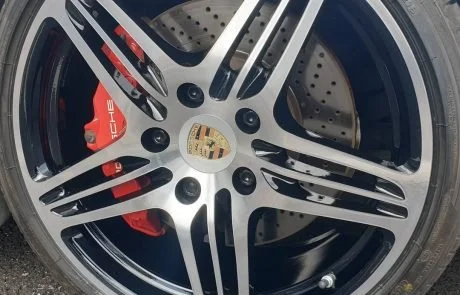
Unlike standard alloy wheels, which are coated entirely with paint or powder coating, diamond cut wheels combine two elements. The base of the wheel is painted, but the front face is then machined using a precision lathe. This machining process removes a thin layer of metal, exposing a bright, reflective surface.
The freshly cut metal is then sealed with a clear lacquer to protect it from moisture, corrosion and environmental exposure.
This combination of paint and exposed metal creates the distinctive finish that defines diamond cut wheels. However, it also introduces a key limitation: the finish depends on removing material from the wheel itself.
What Happens During Diamond Cut Refurbishment?
When a diamond cut wheel is refurbished, the process essentially repeats part of the original manufacturing method.
The wheel is first stripped of its existing coatings, including any damaged lacquer or paint. Once prepared, it is mounted onto a precision lathe. The face of the wheel is then machined again, removing a very fine layer of metal to restore a clean, uniform surface.
After machining, the wheel is lacquered to protect the exposed aluminium and complete the finish.
While this process can restore the appearance of the wheel to a high standard, it comes with an unavoidable consequence: each refurbishment removes a small amount of material from the wheel face.
Why Diamond Cut Wheels Cannot Be Refurbished Indefinitely
Because the refurbishment process involves removing material, there is a natural limit to how many times it can be repeated.
Each time the wheel is machined, the face becomes slightly thinner. While the amount removed during a single refurbishment is minimal, the cumulative effect over multiple refurbishments becomes significant.
At a certain point, removing additional material may compromise the structural integrity of the wheel or alter its design beyond acceptable tolerances. For this reason, there is always a limit to how many safe refurbishment cycles a diamond cut wheel can undergo.
This is one of the key differences between diamond cut and painted wheels. Painted wheels can typically be refinished multiple times without affecting the structure of the wheel, as the process does not involve removing metal.
How Many Times Is It Safe to Refurbish?
There is no universal number that applies to all diamond cut wheels. The safe number of refurbishments depends on several factors, including:
The original design and thickness of the wheel
The amount of material removed during each machining process
The condition of the wheel prior to refurbishment
Manufacturer tolerances and specifications
In general, most diamond cut wheels can only be refurbished a limited number of times before further machining is no longer advisable. This is why professional assessment is essential before proceeding with refurbishment.
Signs That a Wheel May Have Reached Its Limit
Over time, certain indicators may suggest that a diamond cut wheel is approaching the end of its refurbishment life.
These can include:
Reduced definition in the machined lines or design details
Visible flattening of sharp edges on the wheel face
Previous refurbishments that have already removed noticeable material
Structural concerns identified during inspection
These signs are not always obvious to the untrained eye, which is why specialist evaluation is important.
The Importance of Care Between Refurbishments
Because diamond cut wheels have a limited number of refurbishment cycles, maintaining their condition between refurbishments becomes particularly important.
Damage to the lacquer layer is one of the most common causes of deterioration. Once the protective coating is compromised, moisture can reach the exposed aluminium surface, leading to corrosion beneath the lacquer. This often appears as a cloudy or milky effect on the wheel face.
Regular cleaning using appropriate products, avoiding harsh chemicals and addressing minor damage early can help extend the lifespan of the finish and reduce the need for repeated refurbishment.
Alternative Options When Limits Are Reached
When a diamond cut wheel has reached its refurbishment limit, alternative approaches may need to be considered.
In some cases, wheels can be refinished using a painted or powder-coated finish instead of re-cutting the face. While this changes the appearance of the wheel, it allows it to be restored without removing additional material.
In more severe cases, where structural integrity is a concern, replacement may be the safest option.
Why Specialist Assessment Is Essential
Determining whether a diamond cut wheel can be safely refurbished is not a decision that should be made based on appearance alone. It requires an understanding of the wheel’s history, its current condition and the amount of material remaining.
At The Wheel Specialist, each diamond cut wheel is assessed individually before any machining takes place. This ensures that refurbishment is only carried out when it is safe to do so and that the process is tailored to the specific characteristics of the wheel.
The goal is not simply to restore appearance, but to do so in a way that preserves both the integrity and longevity of the wheel.
Balancing Aesthetics and Longevity
Diamond cut wheels offer a distinctive and highly desirable finish, but they require a more considered approach to maintenance and refurbishment.
Understanding their limitations allows drivers to make informed decisions about when to refurbish, how often to do so and how best to care for the wheels over time.
By balancing aesthetics with long-term considerations, it is possible to maintain the visual appeal of diamond cut wheels while ensuring they remain safe and structurally sound throughout their lifespan.